

Mini-grids in Africa – the decisive role of subsidies in rural electrification
Editor’s note: This article is an English translation of an article by Juliette Bulté, ElectriFI Investment Officer in EDFI MC, originally published in French by Afrive. It has been republished here with attribution to the original author and publication.
Founded in 2016, EDFI Management Company is an investment platform that enables European development finance institutions and other partners to invest in high-impact projects in markets often considered too risky by conventional investors.
Around 600 million Africans still lack reliable access to electricity, and mini-grids are emerging as a key solution for electrifying rural areas. Subsidies play a decisive role here: by improving the economic viability of projects, they allow investors to see opportunities with an acceptable risk-return profile, supporting large-scale deployment.
Universal access to electricity remains one of the major development challenges in Sub-Saharan Africa. The Mission 300 programme, launched by the World Bank and the African Development Bank, aims to connect 300 million people by 2030. In many rural regions, extending the national grid is hard to justify because of low population density and the distance from existing infrastructure.
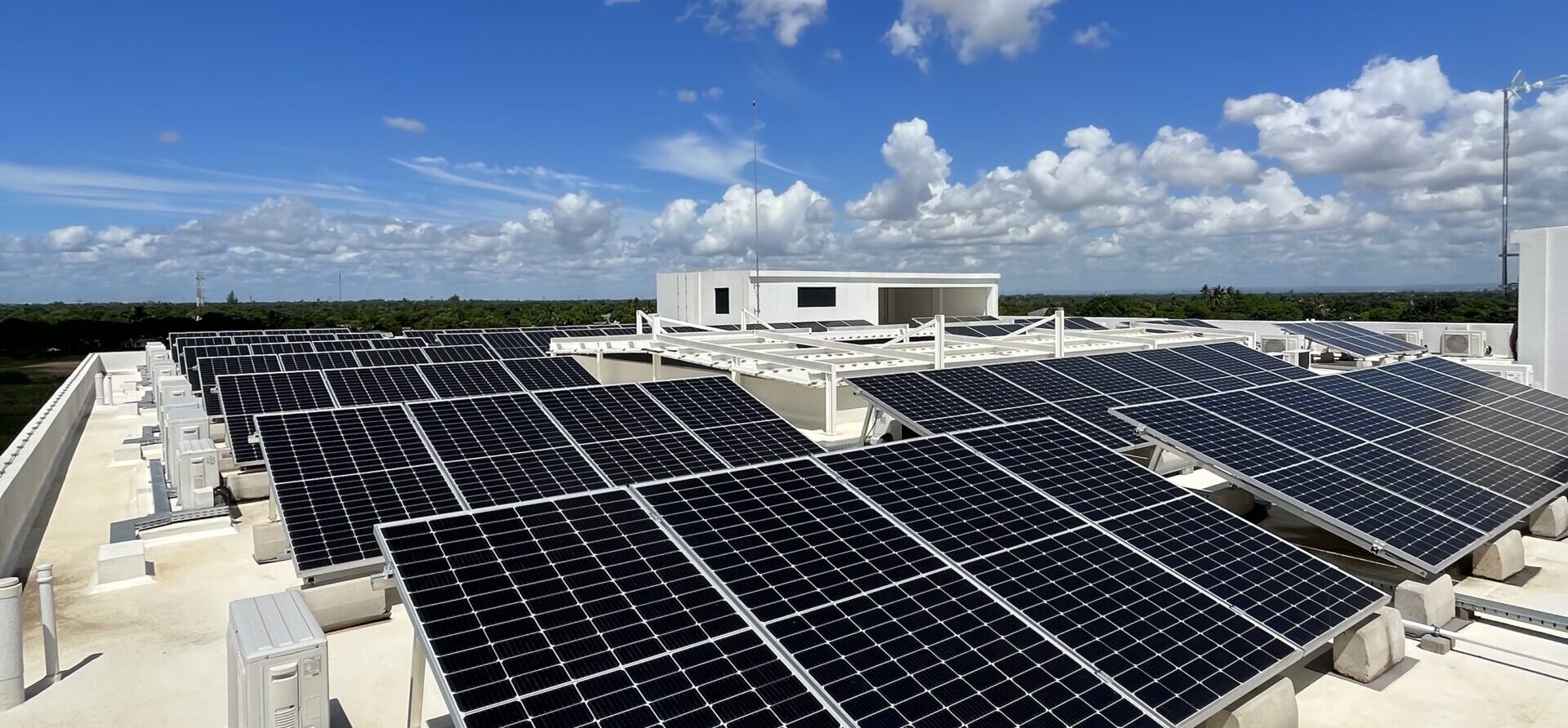
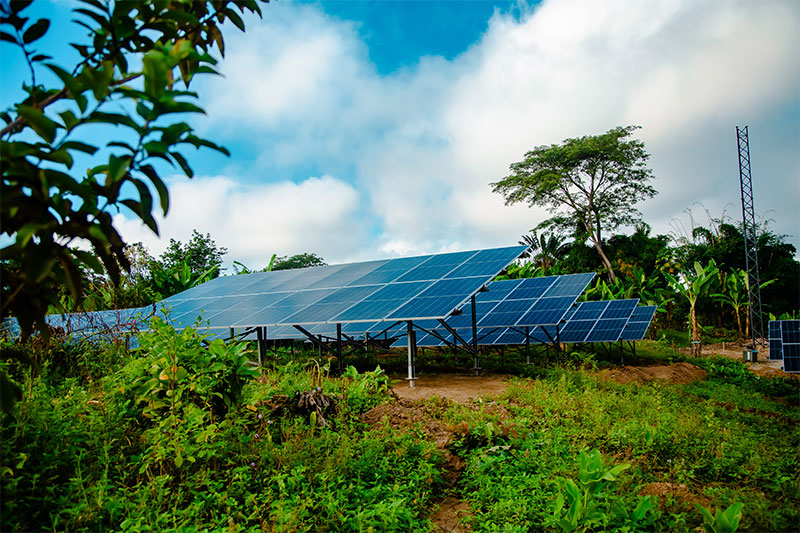
In this context, mini-grids, local electricity generation and distribution systems that operate independently of the national grid, appear to be a well-suited solution. Generally powered by solar installations combined with batteries or hybrid systems, they can electrify villages and isolated communities.
These systems support household uses (lighting, refrigeration, radio/TV, etc.), commercial activities and productive uses (agriculture, processing or manufacturing). Despite this potential, their development still faces a major challenge: achieving economic viability in areas where demand remains limited.
A still-fragile business model
Deploying a mini-grid requires substantial upfront investment. Generation equipment, storage systems and distribution networks all represent significant initial costs. By contrast, revenue from electricity sales builds up gradually, at the pace of user adoption.
In many rural communities, ability to pay remains limited and electricity consumption grows slowly. Operators must therefore keep tariffs affordable while covering their operating costs and repaying their initial investments.
Under these conditions, many projects struggle to reach a level of profitability sufficient to attract private investors. Subsidies then become essential to bridge the gap between infrastructure costs and what local populations can afford to pay.
Subsidies as an investment lever
To support the rollout of mini-grids, several African governments, backed by international institutions and development banks, have introduced mechanisms designed to stimulate investment.
These programmes pursue a dual objective: accelerating rural electrification while encouraging private-sector participation. They generally rest on two pillars.
The first is direct subsidies, often results-based (Results-Based Financing, RBF), which allow financial risks to be shared. By reducing equity requirements and improving profitability, these schemes encourage the development of new projects.
The second concerns the regulatory environment. Clear and stable legal frameworks are essential to build a sustainable market and attract developers and investors.
Examples of subsidy programmes
Nigeria: The Nigeria Electrification Project (NEP), backed by the World Bank, combines competitive tenders with RBF subsidies. Launched in 2018, it has enabled the deployment of around 180 mini-grids and more than one million solar systems, providing electricity to over 6 million people. It was extended in 2023 by the DARES programme, with a budget of around $750 million, which targets 1,350 mini-grids and 17.5 million beneficiaries.
Universal Energy Facility (UEF): Launched in 2020 by Sustainable Energy for All, the UEF also relies on an RBF mechanism. By the end of 2024, it had committed more than $24 million in subsidies, mobilised nearly $20 million in private co-financing and enabled access to electricity for more than 57,000 people.
CEI Africa: Finally, the CEI Africa platform combines subsidies, concessional debt and private capital. Present in several countries, it had by mid-2025 financed 38,000 connections and brought electricity to more than 180,000 people in rural areas.
Implementation challenges
Despite this progress, subsidy mechanisms still have limitations. The widely used RBF model pays out funding once the infrastructure has been built and the connections verified.
While this gives donors assurance that funds are used effectively, it imposes a significant constraint: developers must pre-finance projects. This can put considerable pressure on their cash flow and make it harder to access financing.
This sometimes creates a dynamic that is difficult to reverse: investors wait for subsidies to be confirmed before committing their capital, while donors require secured financing before awarding those subsidies.
To support these companies through this critical development phase and help them bring such programmes to fruition, ElectriFI has notably financed Husk, WeLight and PowerGen, mini-grid developers and operators, enabling them to secure these subsidies and deploy more than 110,000 connections. This financing was structured at the parent-company level rather than at the project level, making it possible to reallocate capital to other projects once the subsidies had been obtained.

Stimulating electricity demand
Beyond financing, demand growth is a key issue. The viability of mini-grids depends on the ability to stimulate productive uses of energy.
Access to energy can foster local economic activity: agricultural processing, crafts, technical trades (carpentry, welding, mechanics), commerce and digital services. These uses generate more regular consumption, improving operators’ financial stability.
With this in mind, collaboration with NGOs and microfinance institutions is essential to support local entrepreneurship and facilitate access to electrical equipment. Some programmes, such as CEI Africa or UEF, already include schemes dedicated to small businesses.
A turning point for electrification in Africa
Mini-grids are now emerging as an indispensable solution for electrifying the most isolated areas. Durable and scalable, they can operate for several decades, be expanded as demand grows and, eventually, be integrated into national grids.
According to the World Bank, these systems could connect more than 380 million people by 2030, which would require roughly 160,000 mini-grids. Such a target implies considerable investment, estimated at over $90 billion.

In this context, subsidies and public mechanisms will play a decisive role. Well designed, they can structure the market, reduce risks and speed up the mobilisation of private capital.
As business models consolidate and regulatory frameworks strengthen, mini-grids could become a pillar of Africa’s energy transition, while also contributing to the economic development of rural communities.
About the author
Juliette Bulté is an Investment Officer at EDFI Management Company (EDFI MC). She works for ElectriFI, an impact investment facility funded by the European Union that invests in companies and projects aiming to expand access to sustainable and affordable energy in Africa and other emerging markets.
Before joining EDFI MC, Juliette was an Investment Officer at NEoT Capital, where she worked on off-grid electrification and energy transition projects. She previously gained project finance experience at Natixis CIB and the Agence Française de Développement. Juliette holds an MSc in Infrastructure Project Finance from École des Ponts ParisTech, where her thesis focused on rural electrification in Africa, as well as a Master’s in Corporate Finance from Sciences Po Strasbourg.