Securing critical raw materials: in discussion with the EU Commission, industry and development financiers
By Juliette Bulté, Investment Officer, EDFI Management Company
Introduction
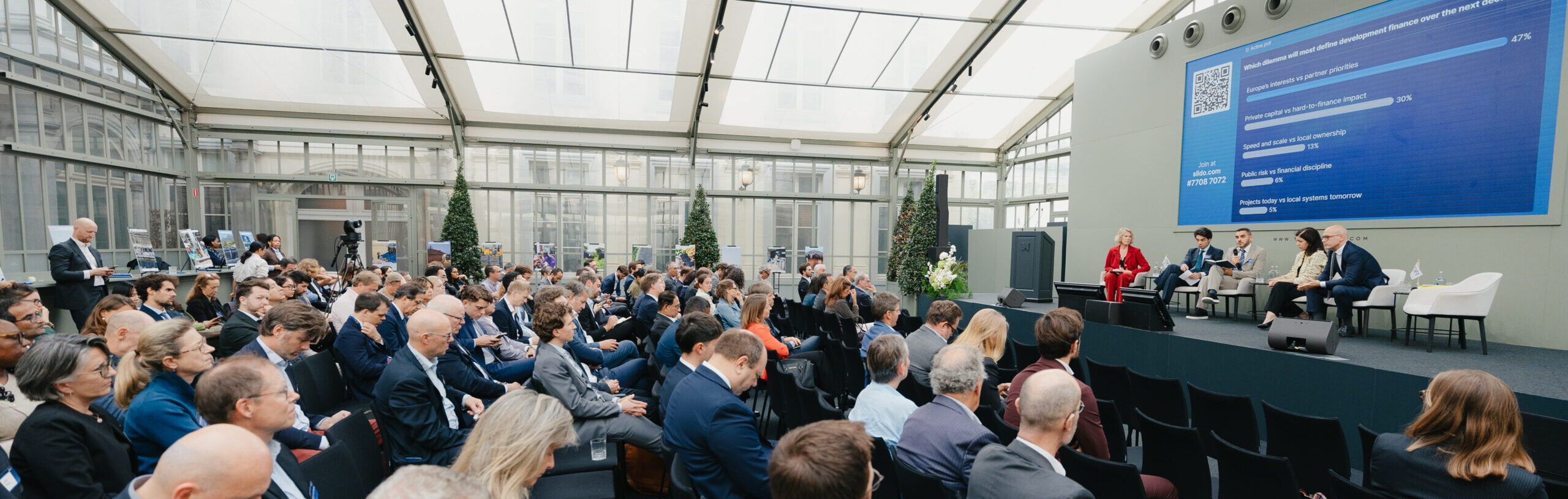
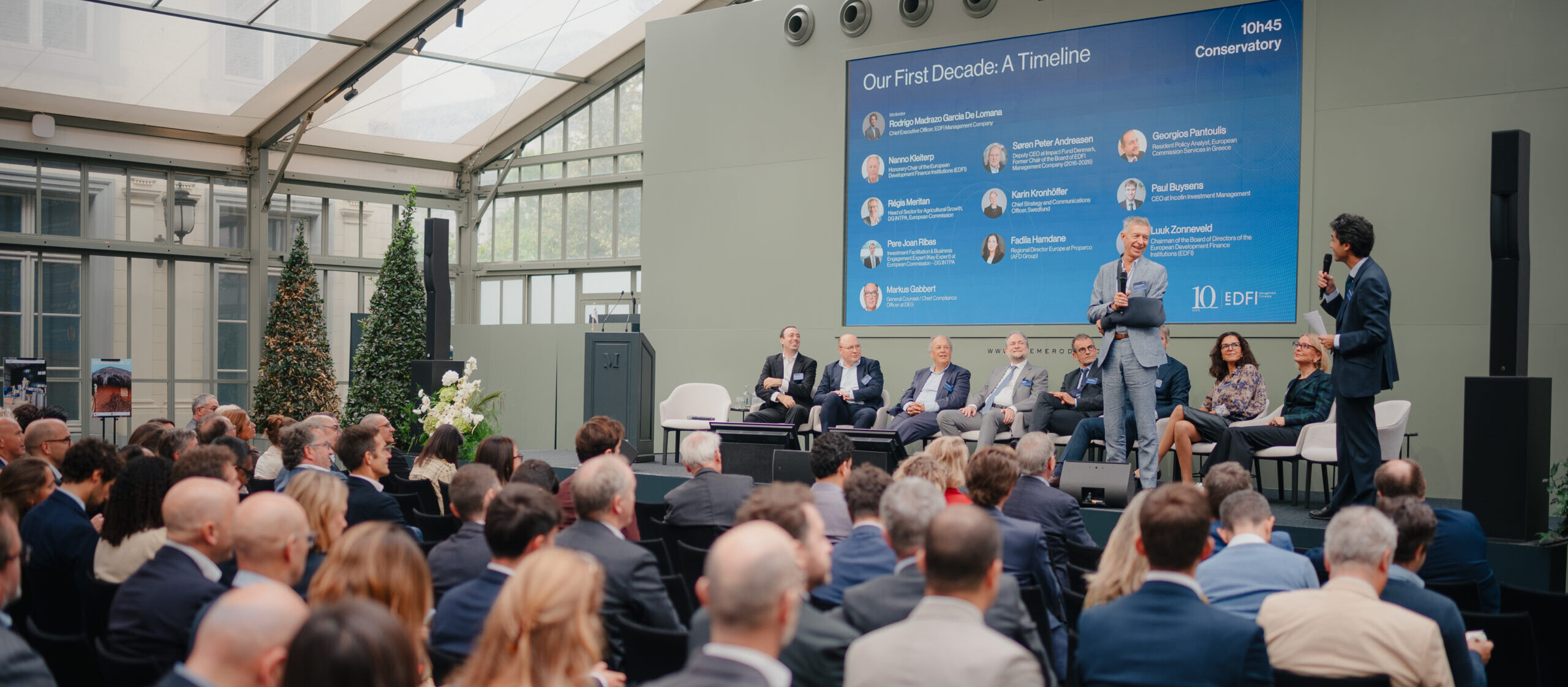
When Taneli Lahti, Director at DG INTPA, opened our session at EDFI MC’s 10th anniversary conference, he reminded the room that for some critical raw materials almost 90% of Europe’s supply comes from a single country, and that this country has recently shown it is willing to exploit the dependence. I moderated the panel that followed, which set out to ask whether Europe can do things differently. The question matters directly to EDFI MC, which is working with the European Commission on a new EU Critical Raw Materials Investment Facility to help projects reach bankability and attract public and private capital.
Jaakko Kangasniemi, CEO of Finnfund, began by acknowledging that for a development finance institution few areas are as demanding as this one, given volatile prices, heavy environmental and social risks and very long timelines. He still made the case for trying, with a Finnish saying that salmon is worth fishing for even when you are not sure of catching one.
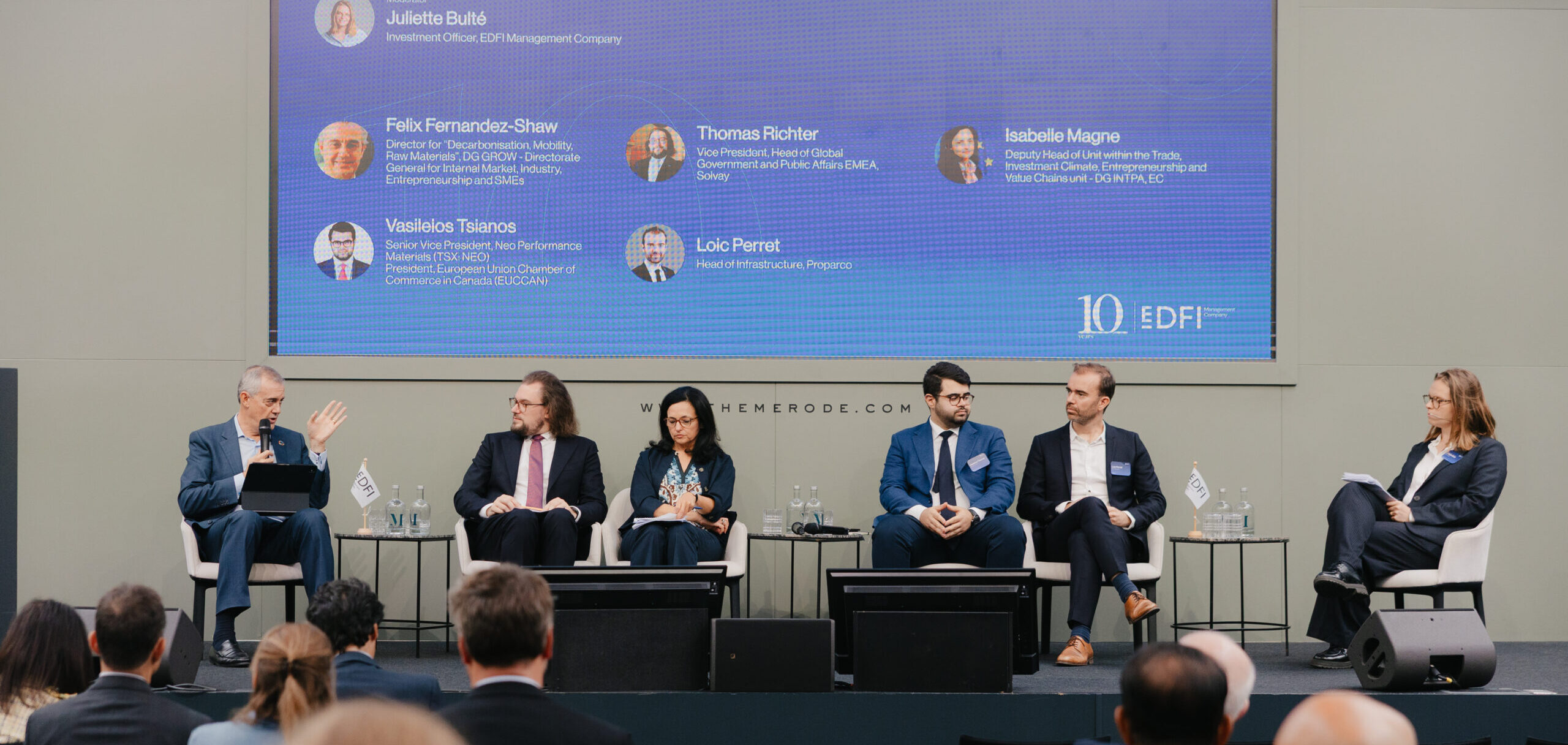
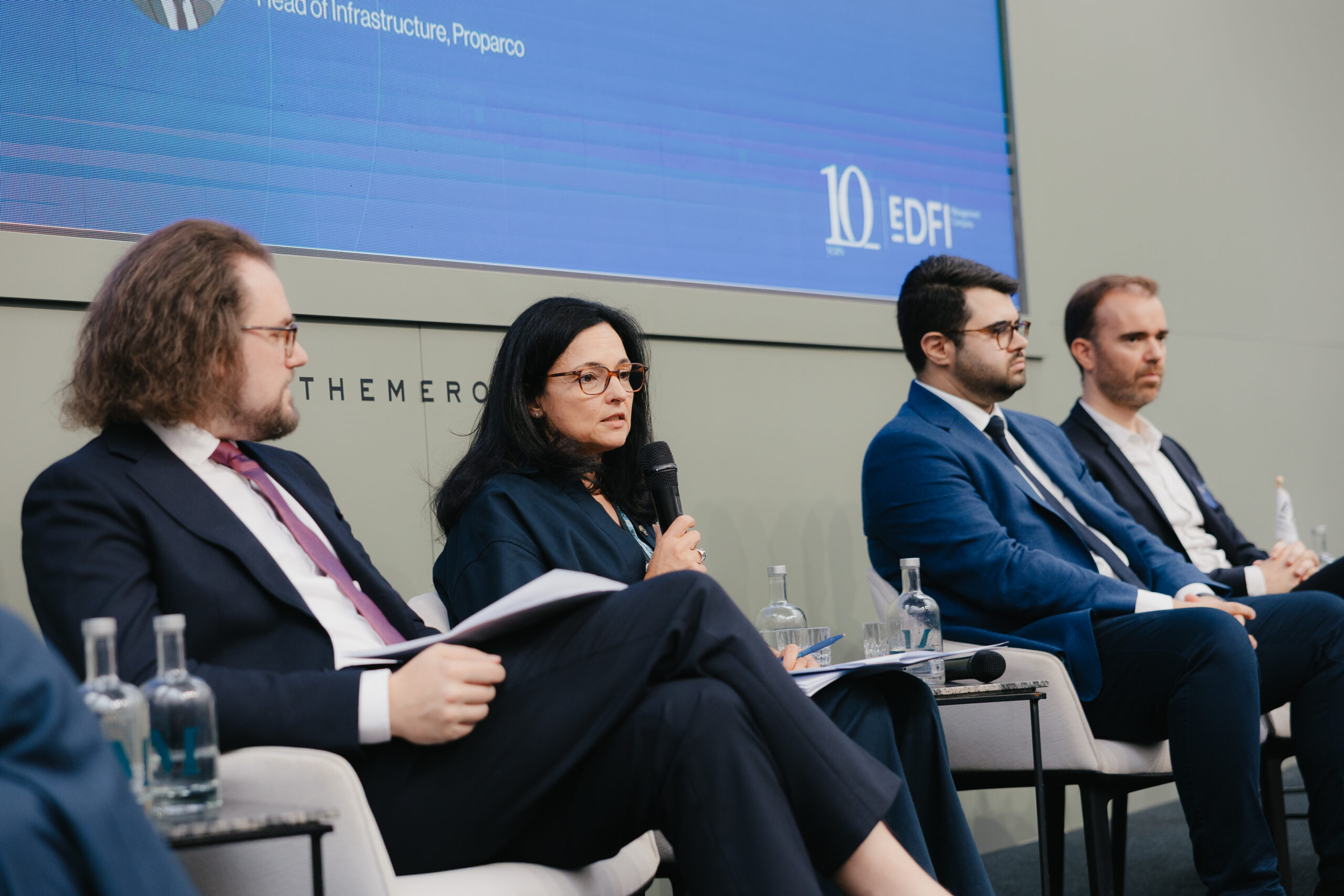
On the panel I was joined by Félix Fernández-Shaw, Director Decarbonisation, Mobility, Raw Materials, at DG GROW, Thomas Richter, Vice President Global Government and Public Affairs at Solvay, Isabelle Magne, Deputy Head of Unit at DG INTPA, Vasileios Tsianos, Senior Vice President at Neo Performance Materials, and Loïc Perret, Head of Infrastructure at Proparco.
What we heard
Connecting the chain
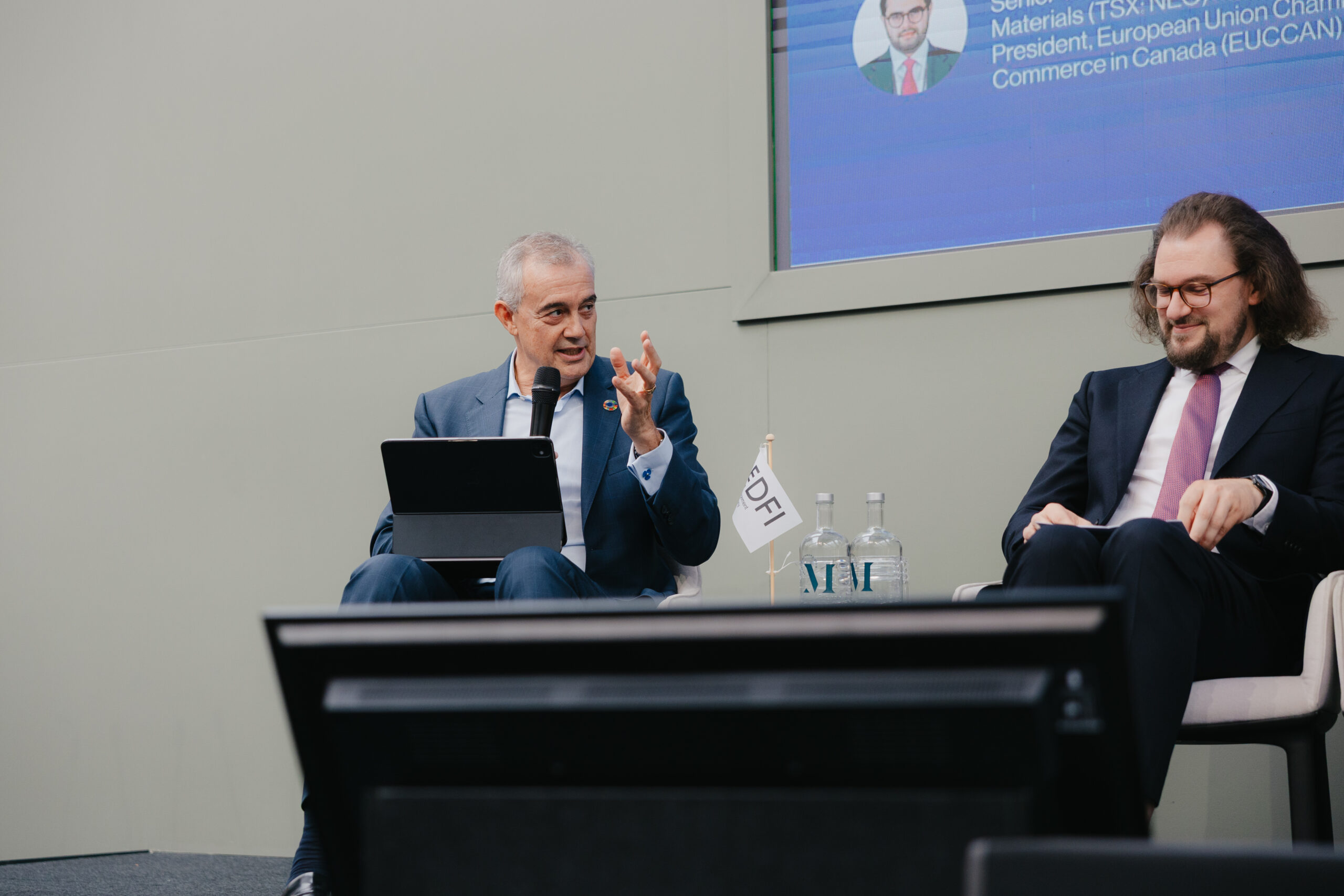
Félix Fernández-Shaw opened for the Commission with a warning that funding one link of the value chain that does not connect to the next only moves the bottleneck further down. That is why the Commission is setting up a CRM Centre to join the dots from rare earths to magnets to the car and wind industries. Nobody can replace every supplier, he said, but Europe can drive a “resilience wedge” into the present monopolistic situation, so that when push comes to shove it is “ready to shove and not just ready to be pushed”.
Thomas Richter recognised this from Solvay’s side. The company has worked in this market for nearly eight decades and owns its technology, and it commits capital when suitable material is coming in on one side and customers are ready to take the output on the other. The chain, in his words, “needs to be credible on both sides”, and strong enough to survive a price shock that China might choose to trigger, since in his view Beijing has no interest in seeing Europe build a sustainable chain of its own. Solvay’s La Rochelle facility has advanced on that basis, at the pace the market allows. Vasileios Tsianos added that more is in place than people think: Europe’s installed processing capacity already covers about 80% of its demand, and much of it is waiting for feedstock.
Partnerships with resource-rich countries
Because most of the resources lie outside the EU, Isabelle Magne stressed that these partnerships have to work for the countries concerned as well. DG INTPA therefore looks beyond investment to skills, infrastructure and research, and has already signed more than 16 memoranda of understanding with partner countries. She pointed to lithium processing in Brazil and the reprocessing of mining tailings in DRC as examples of projects that keep part of the value locally while securing supply for Europe.
The risk question
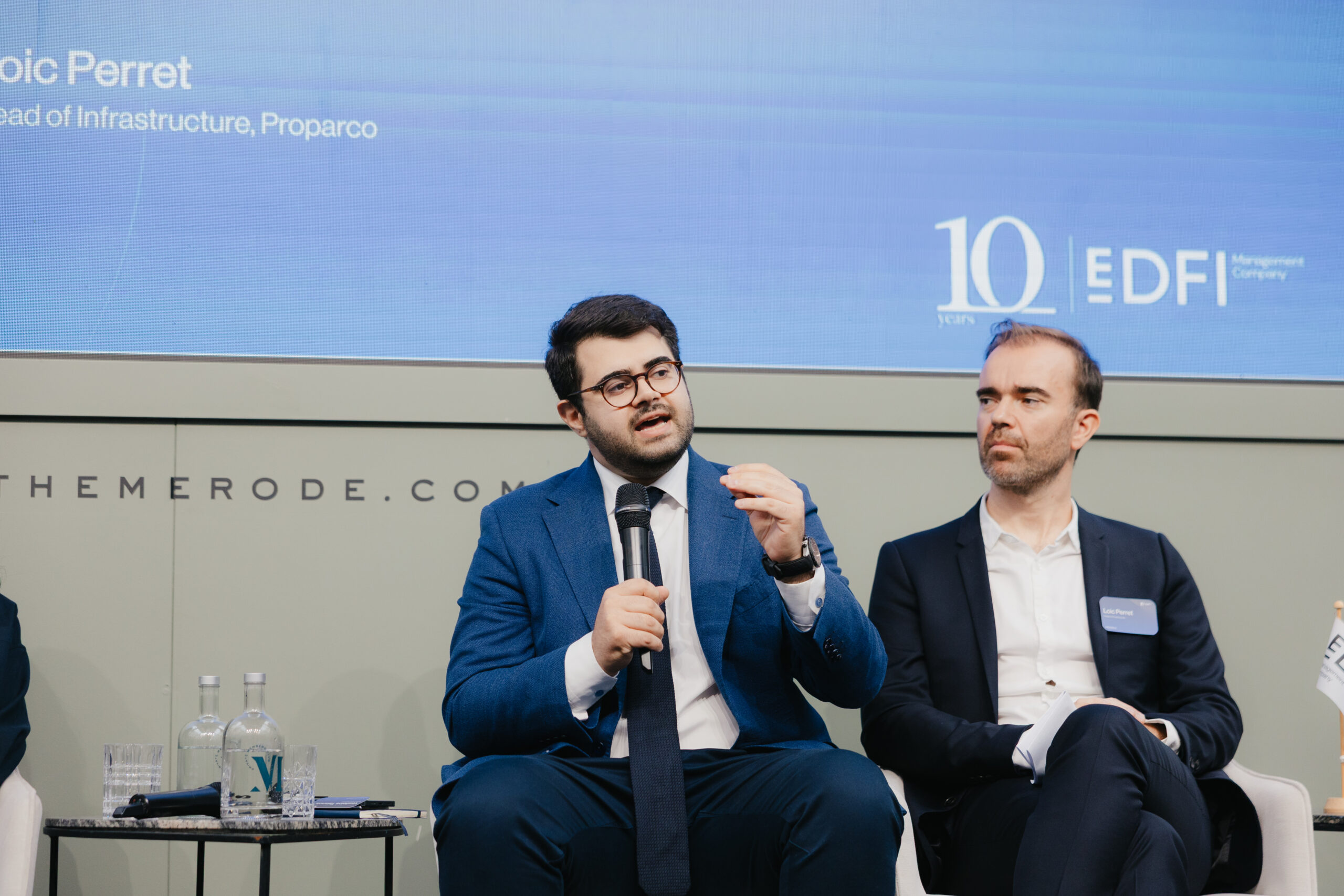
The sharpest exchange was about risk. Vasileios Tsianos argued that the business case is stronger than financiers tend to think: Europe is the largest rare earths market outside China, EU legislation creates what he called “a regulated minimum demand”, and about a million European jobs depend on these supply chains. “Tell me a better case,” he told the financiers in the room, “what am I missing?”
Loïc Perret replied that on Proparco’s risk matrix every risk of a mining project comes out as high or very high, from construction and technology to price, offtake and politics, and that a copper mine can take between 10 and 17 years to go from exploration to production. Buyers want to see the mine built before they commit to offtake while lenders want the offtake contract before they finance it, so the development phase has to leave the risks identified, quantified, allocated and mitigated, with a sponsor whose capital structure can absorb delays and cost overruns. None of this means Proparco will not do such projects, he added.
Vasileios Tsianos’ answer to the lenders was to pool their due diligence rather than each building their own team, because over the next two or three years they will need “to look at 50 projects and underwrite five”, and ideally “one or two yesterday”.
Who pays for it
Isabelle Magne acknowledged that Europe is competing with players whose standards may be lower, which makes the European approach more expensive in the short term. But she refused to treat it as a choice between competitiveness and standards: for Europe, the aim is to move fast while keeping its standards, not to trade one for the other.
Will customers pay for responsibly produced material? “Some will, most probably won’t, at least not now and certainly not alone,” Thomas Richter answered. Interest is strongest in defence and medicines, where some tier-one suppliers already pay to de-risk their chains, while many carmakers go back to the cheapest offer once pressure on the market eases. He distinguished between a quality and ESG premium, which the market should eventually carry, and a security premium, which calls for public-private risk sharing, including the price floor foreseen under the new facility. The floor, he stressed, is not meant to generate “gigantic profits” but to protect investments along the whole chain if the market collapses, and he asked governments to take part of the risk given their strategic interest.
Conclusion
Félix Fernández-Shaw had the last word, and it sums up the afternoon well. Everyone on the panel works with checklists, the Commission included, but a value chain will not build itself while upstream waits for downstream and downstream waits for upstream. Public officials, he said, have to act on that chicken-and-egg problem rather than just run the checklist. This is where the new EU Critical Raw Materials Investment Facility, on which EDFI MC is working with the Commission, should help, by supporting projects through the development stage and sharing risk where the market cannot yet carry it.
My thanks to Félix Fernández-Shaw, Thomas Richter, Isabelle Magne, Vasileios Tsianos and Loïc Perret for the lively discussion, and to Jaakko Kangasniemi and Taneli Lahti for opening the session.