To travel far, we travel together: what the next decade asks of development finance
Future Outlook – Article by Linda Broekhuizen, Chair of the Board, EDFI Management Company
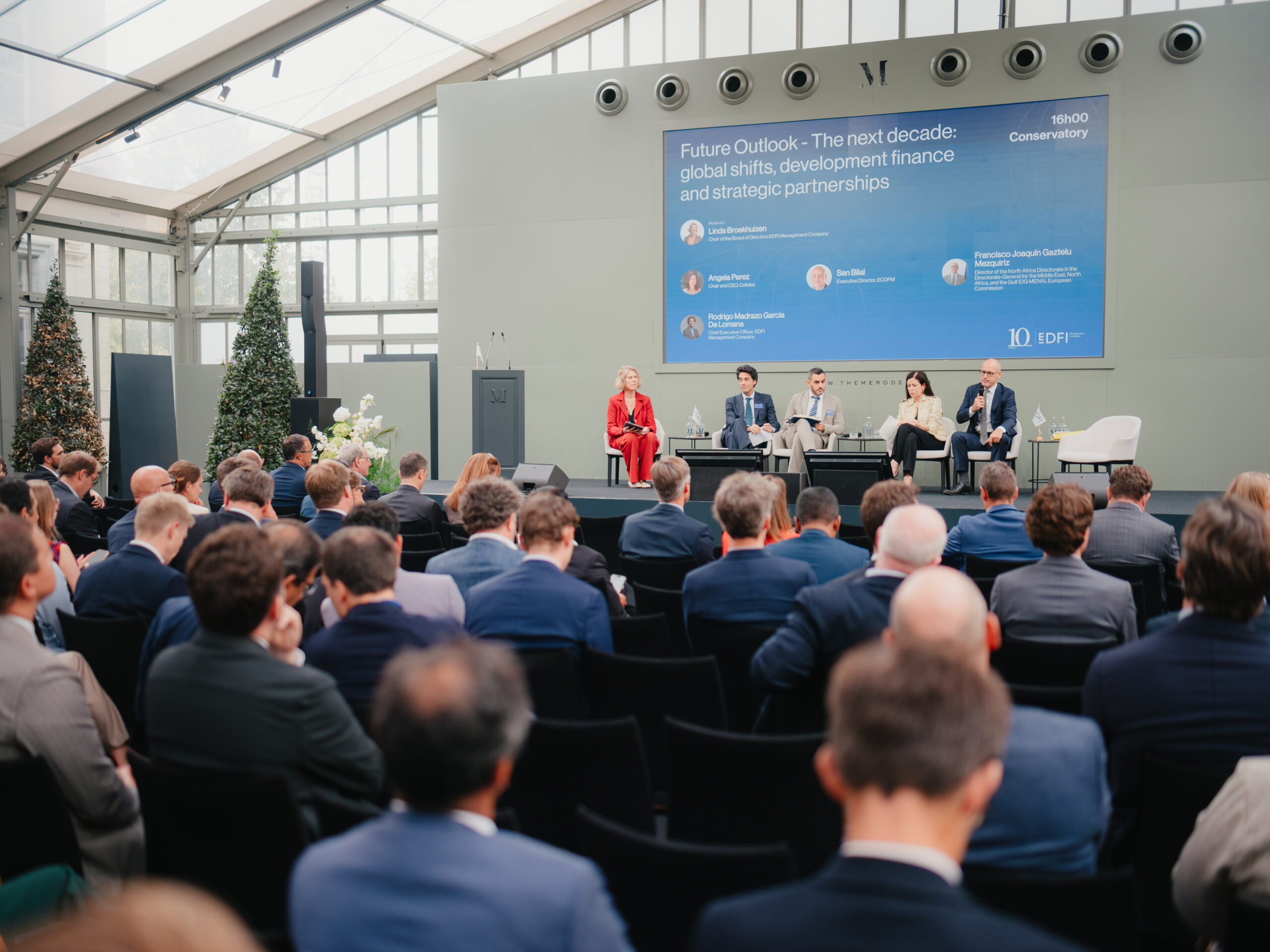
The final session of EDFI MC Corporate Day 2026 looked ahead. Its main lesson was that the dilemmas in development finance will not go away. What matters is how we honestly embrace those dilemmas and manage them together.
Looking forward, together
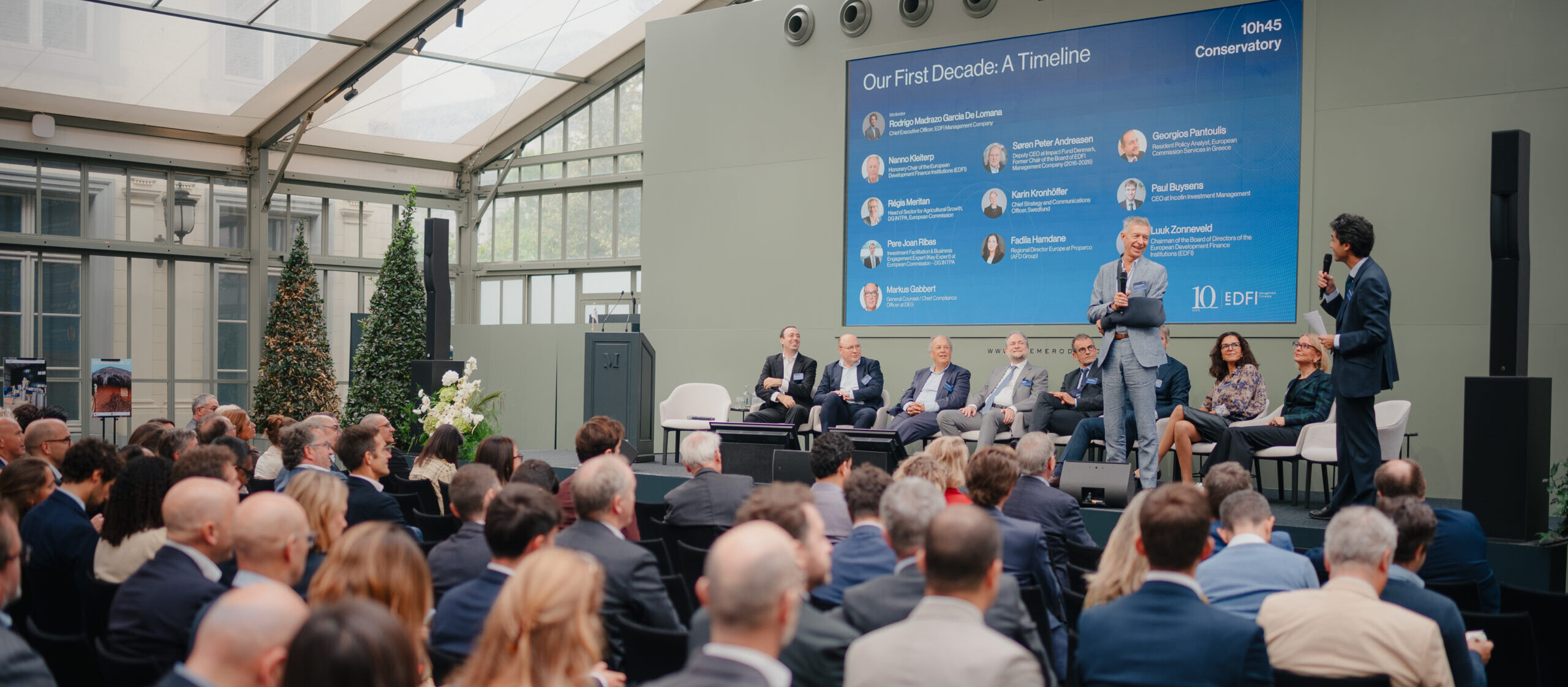
We spent the morning of our tenth-anniversary Corporate Day looking back. We traced EDFI MC’s first decade and the lessons of EU–DFI collaboration. After that we discussed Ukraine’s recovery, Europe’s approach to critical raw materials and the investment needed to close Africa’s hunger gap. The closing session, Future Outlook: The next decade, had a different job: to take all of that and ask what the next ten years will require of us.
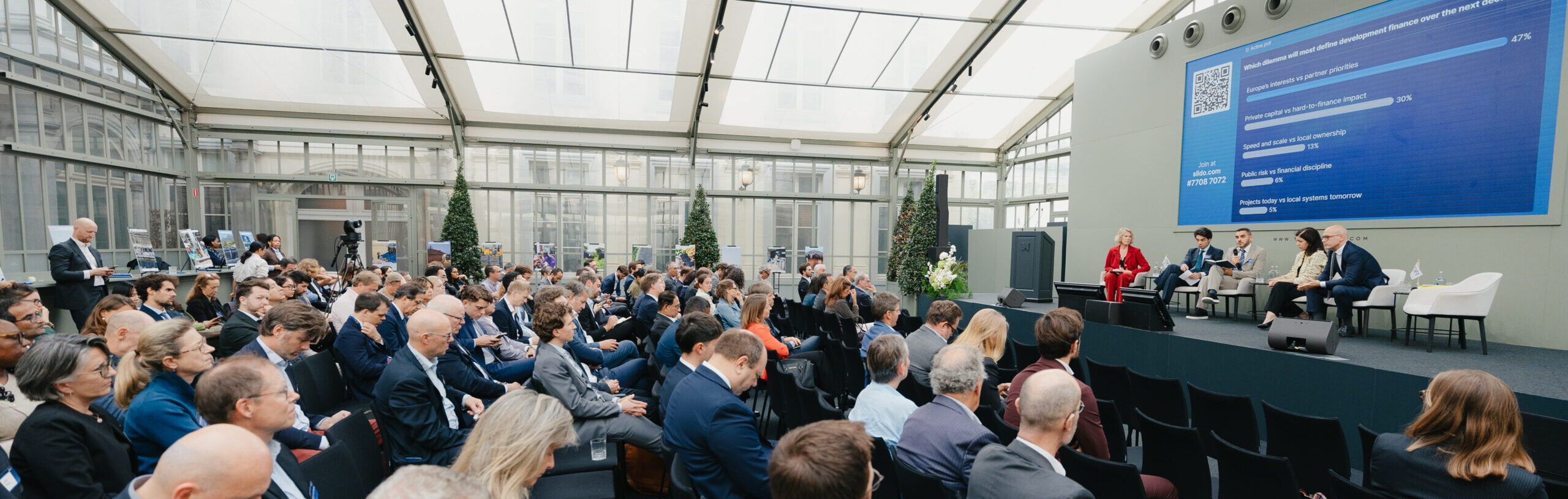
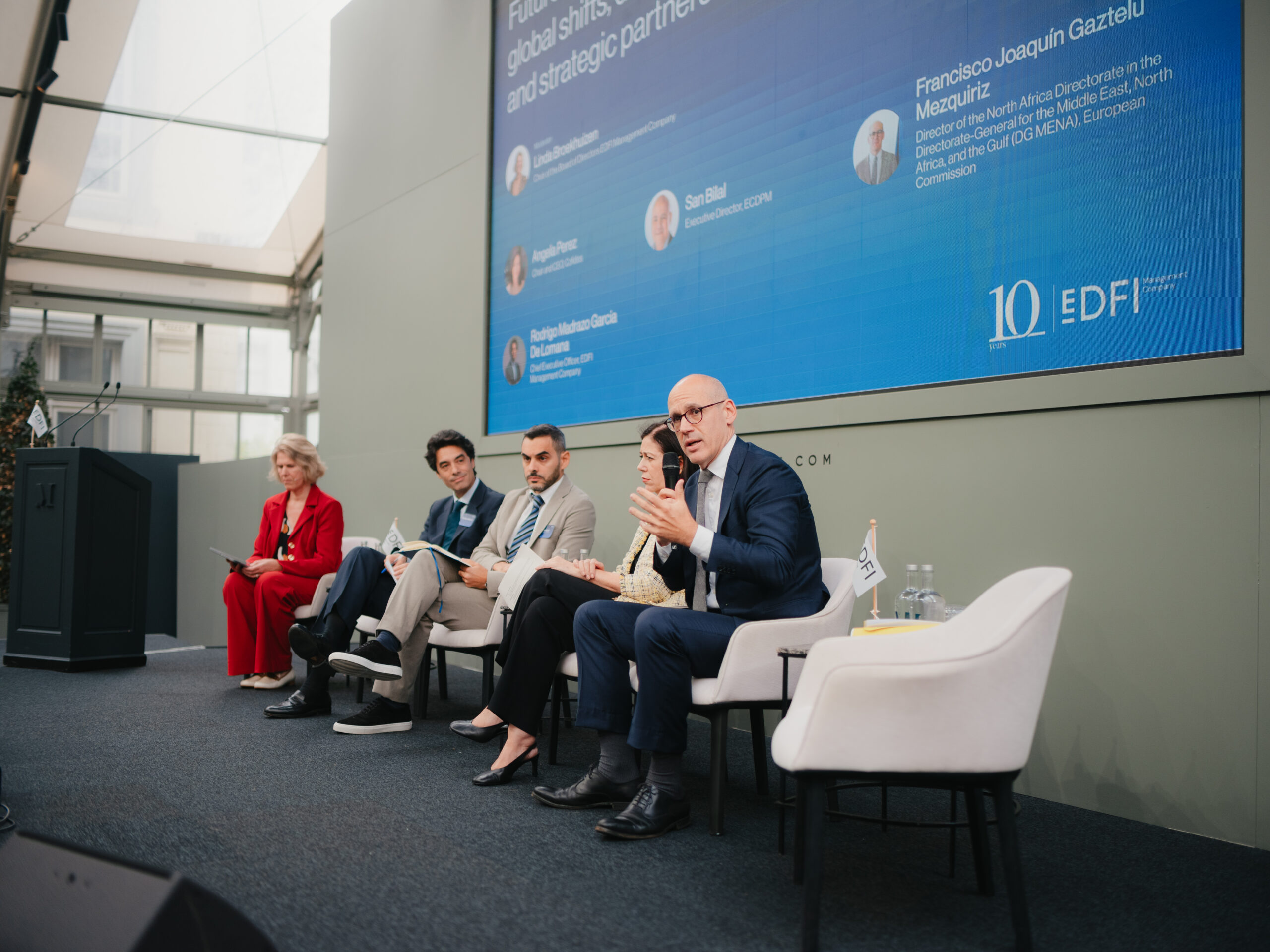
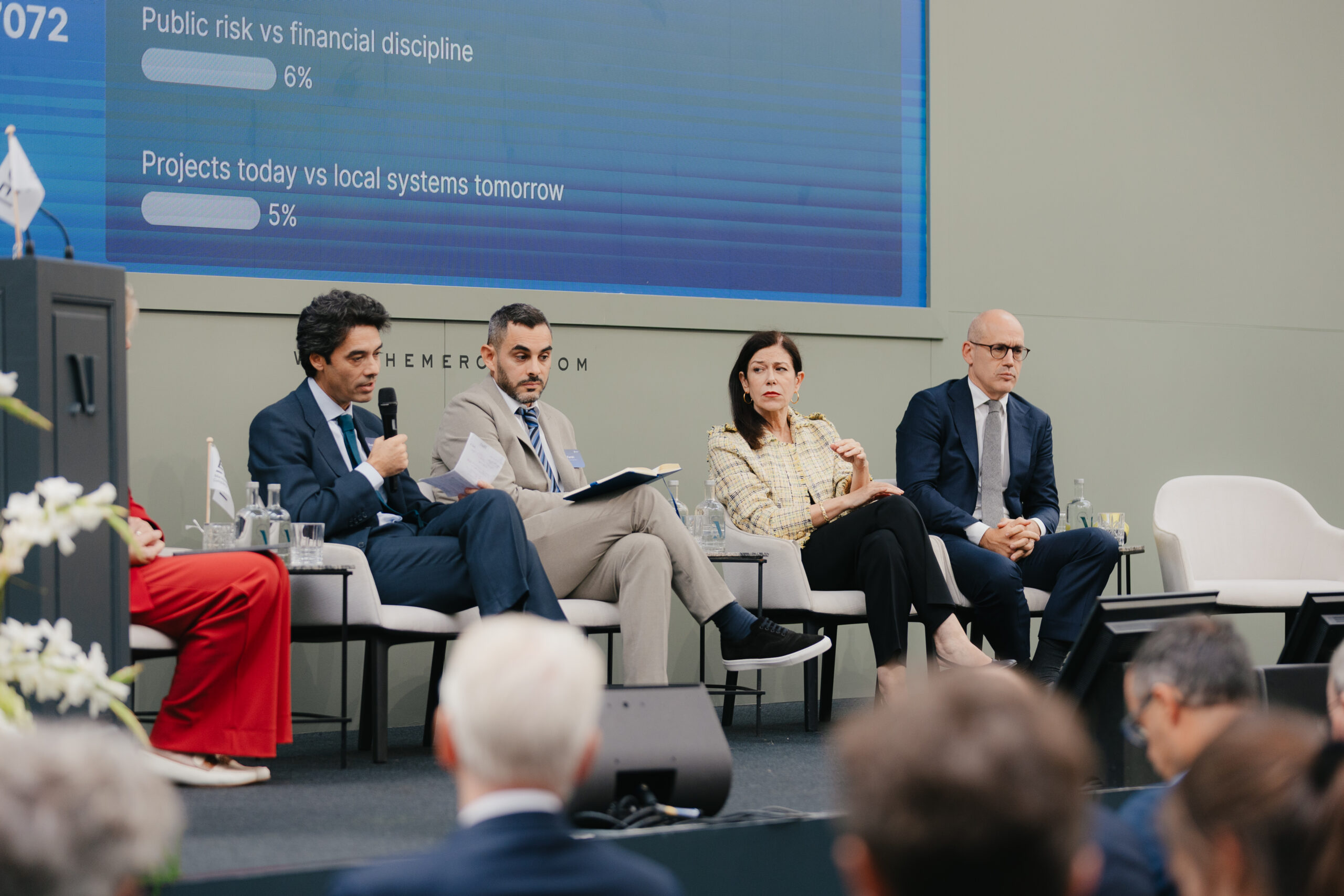
It was a privilege to moderate this session with Francisco Gaztelu Mezquiriz, Director for North Africa at DG MENA, European Commission; Ángela Pérez, Chair and CEO of COFIDES; Karim Karaki, Head of ECDPM’s Economic Recovery and Transformation programme, who kindly stepped in for San Bilal; and Rodrigo Madrazo, CEO of EDFI MC.
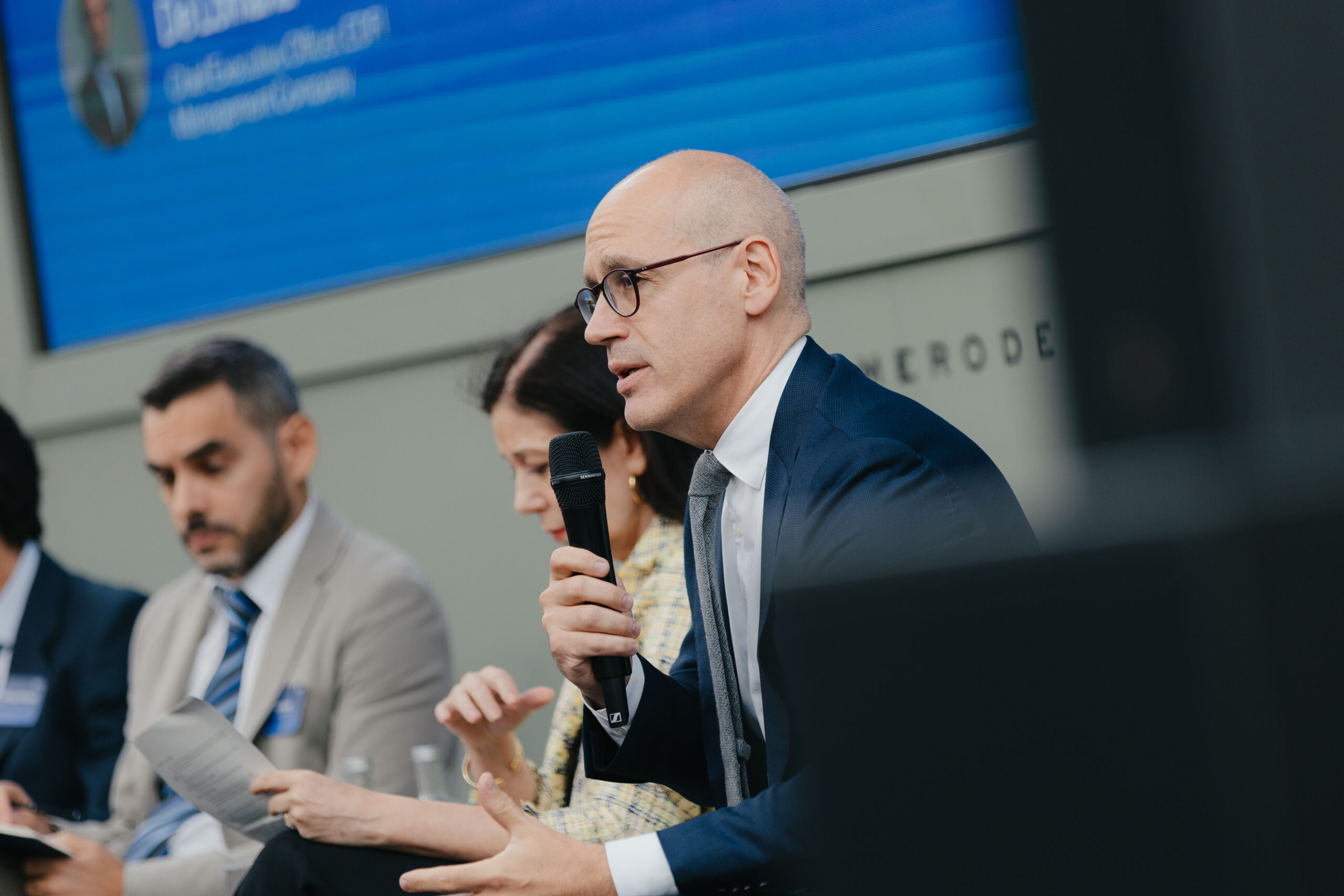
Francisco set the tone with his opening remarks, and he was candid about it. Europe is navigating challenging times, and geopolitical shifts are shaking the regions where we invest. In his view, the old donor–recipient model has had its day. What replaces it has to be a real partnership, built on interests that both sides identify and own. The Pact for the Mediterranean is meant as that kind of offer. As he put it, our relationships are going to become “much more real”. With a tighter Multiannual Financial Framework ahead, partner countries’ own resources, the private sector and the DFIs in the room will matter more than ever.
The dilemma the room chose
We asked the audience which dilemma will most define development finance over the next decade. The answer came quickly: Europe’s interests versus partner priorities. Private capital versus hard-to-finance impact came second.
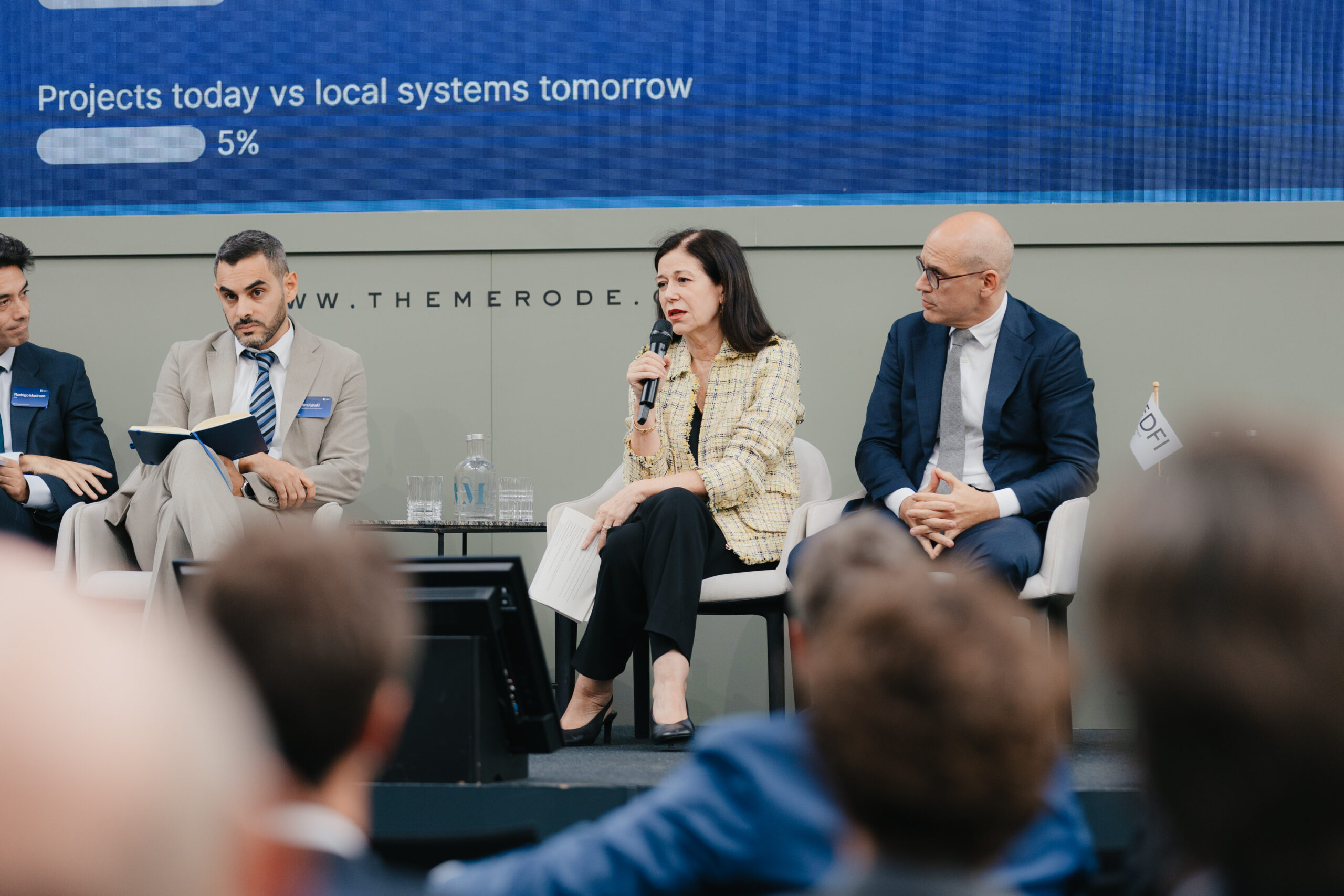
Ángela pointed out that the two are closely linked. European resources are increasingly expected to serve a European interest, while our development commitments stay in place. Her answer was not to choose between them. It was to structure good projects that bring a European corporate, offtaker or contractor on board and still transform the host country, with quality jobs and real value chains. Those projects need local partners, local licences and local support, because they are built in the partner country.
Karim added a useful note of caution. Global Gateway rests on matching European interests with partner priorities, and many projects do both. A renewable energy plant can bring clean power to households and industry and open markets for European clean tech. But we should not pretend that everything is win-win. Some work is mainly about development, and some is mainly geostrategic. Critical raw materials processing is a clear case: it can add value in partner countries or support Europe’s economic security, and both aims are legitimate. Partner countries, he said, often wish Europe would state its interests as plainly as some of its competitors do.
Rodrigo called the trade-off “difficult and dangerous”. If we lean only towards partner priorities, a project may fall outside the scope of Global Europe funding. If we lean only towards Europe’s interests, we will rightly be criticised. The way through is partnership. When we invest EU budget or DFI balance sheets abroad, the host country must retain a real share of the value: jobs, tax revenue and technology, with no environmental or social harm. Each partner brings its own focus. DFIs bring sustainable development, the Commission brings the EU interest, and investors bring return. “Too many ingredients in the cocktail,” he admitted, “but this is the only way forward.”
Francisco added that the dilemma is rarely black and white. He gave the example of a partner country with two-thirds of its automotive supply chain integrated into Europe’s. Its officials were concerned about the Industrial Accelerator Act, but not angry. They understood Europe’s push to reindustrialise. What matters is being clear about what we want to protect and then negotiating. When I asked whether that makes it a partnership of equals, his answer was precise. Equals, yes, but not equality in every sector. A partnership has gives and takes, and the whole should be a win-win. Ángela gently pushed back, and it was a good moment. Values matter, she said, and we should be transparent about how we interpret them.
Where public money should take risk
Our second question to the audience was the harder one. If EU public resources are limited, where should they take the greatest risk? The room aligned clearly on climate resilience and food systems, with shared strategic value chains in second place.
Francisco confirmed that both remain firmly within Europe’s interest. Speaking as an agricultural engineer, he admitted that food can feel like “an old priority” next to supply chains. Yet it remains vital for partner countries and for Europe’s own food resilience. It is also inseparable from water, biodiversity and climate. He also addressed CBAM, which many partners see as a trade barrier. Some measures protect EU interests and must be negotiated. Others project global policies such as decarbonisation, and Europe’s task there is to win partners over and turn them into an economic opportunity for both sides.
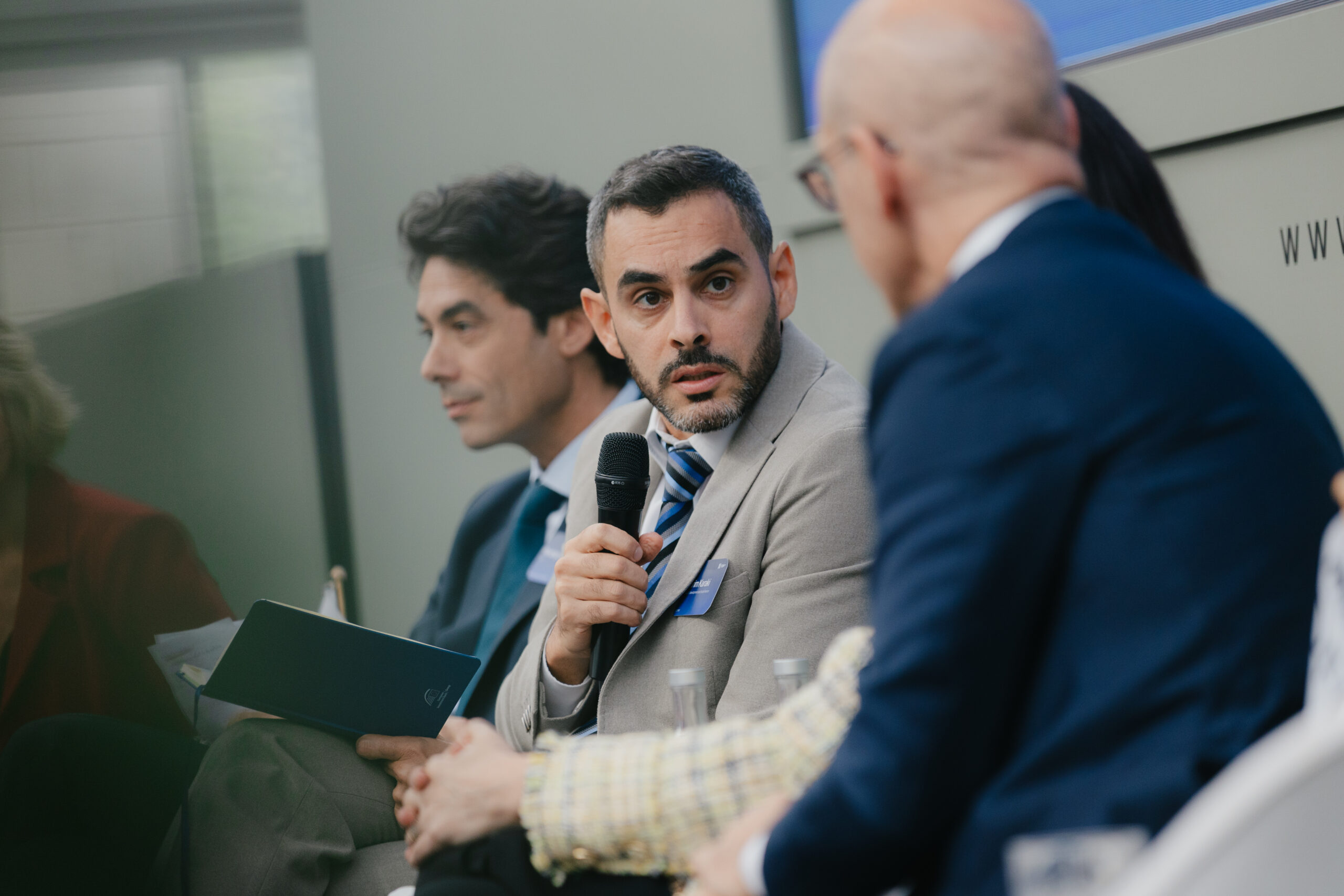
Karim challenged us to go further and actually prioritise. In the Mediterranean, the Team Europe investment platform is focused on energy. Egypt’s NWFE platform shows how water, energy and food can be linked. And food is a sector where DFIs mostly work through banks and funds, an intermediated model that is less in fashion today. “We do have many, many objectives,” he said. “What we are lacking is prioritisation.”
What DFIs bring: structuring, origination and early-stage risk
On strategic value chains, Ángela described DFIs as one part of a wider ecosystem that includes local banks, fund managers, corporates and multilaterals. She called for a franker, closer relationship with European corporates. Many have strong ESG systems and are “great players for change”, DFIs also know partner-country private sectors well, and they can bring structuring capacity. “It is quite frustrating,” she said, when projects take years or fail because they were poorly structured.
Karim argued that DFIs will need to be far more strategic in originating projects, and in some cases design them. European companies should be brought in at the earliest stage, not once a deal is already shaped. Closer coordination with export credit agencies would also let each institution do what it does best. When a participant asked about the Global Gateway Investment Hub, Rodrigo described it as the forum for testing whether an investment is aligned with European values and interests. Karim saw it as useful, but only as one piece of the puzzle. In his words, the strength of Europe’s financial architecture for development is that it can rely on financial institutions that know how to originate.
Rodrigo’s closing remarks gave us the sharpest trade-off of the session. He was glad to see climate and agri-food at the top, because they are EDFI MC’s specialisms. He was disappointed to see SMEs and early-stage businesses at the bottom. In a middle-income country with modest currency and regulatory risk, EU budget support may not be needed at all. If the budget is limited, he said, “the last frontier we want to keep is additionality”. That means spending it where the need is greatest and the impact highest, which is often in early-stage investment.
What I take into our next decade
I left the stage convinced that development finance will not be judged by whether it avoids dilemmas. It will be judged by how openly it embraces them from the fundaments of its impact mandates and in collaboration with a broad ecosystem of partners. Europe’s strategic resilience and partner-country development can reinforce one another. But that only happens where partnerships create real local value, public finance is used with discipline, risks and benefits are shared fairly, and local institutions help shape both priorities and delivery.
That is the spirit in which EDFI MC enters its second decade. We will be clear about interests, be selective with scarce public resources, and hold on to additionality. I closed the session with an African proverb that many in the room knew: if you want to travel fast, travel alone; if you want to travel far, travel together. We still need speed. But the next ten years are about going further, scaling up and deepening local impact, together.
My thanks to Francisco, Ángela, Karim and Rodrigo for a candid conversation. Thanks also to everyone in the room who voted, asked questions and then joined us in celebrating ten years of EDFI MC with a birthday cake and a song. Most of all, thank you to the EDFI MC colleagues, our shareholders and our partners at the European Commission, whose work over the past decade made that celebration possible.