

Technical Assistance in practice: Supporting investees to build stronger businesses

Technical Assistance (TA) at EDFI Management Company is essentially a way to stand next to our investees as they grow – bringing in targeted expertise, not just capital, so they can strengthen their businesses, sustain their growth and unlock more funding over time. It is funded by the EU and used very concretely: to solve real operational challenges, close capacity gaps, and improve impact and resilience in difficult markets.
Strengthening a cashew processor – and its ecosystem
In Togo, Cajou Espoir shows how TA can support both a company and the farmers around it. The business is transitioning to fully organic production and working with thousands of smallholders. With EDFI MC support, the company accessed support of an experienced consultant to put in place environmental and social policies and to train a local E&S manager, turning high-level environmental and social requirements into daily practice.
EDFI MC has further supported the company through a second TA project focused on beekeeping. Thanks to COLEAD’s team of local and international experts, Cajou Espoir’s team learned how to integrate beehives into cashew orchards, which will help the company increase yields, create a new income stream from honey, and support biodiversity.

Streamlining the operations of clean cooking and access to energy companies
TA often helps successful energy companies organise themselves for scale and prepare for growth capital.
In Zambia, EDFI MC used its TA funding help RDG Collective hire an interim CFO, paving the way for the company’s successful Series A with local and international investors. RDG Collective is a Zambia-based renewable energy company that empowers off-grid households and businesses by delivering affordable solar home systems and productive-use appliances through a pay-as-you-go model to expand clean energy access and improve livelihoods. The company used the support of a senior, experienced finance professional to consolidate their finance and risk management process, as well as to train local teams.

Emerging Cooking Solutions in Zambia, for example, uses TA to overhaul and optimise its call centre operations. For a company selling clean cooking solutions, the call centre is the frontline – where customers get information, after-sales service, and payment support. With external support funded by TA, the company is analysing workflows, refining scripts and processes, and training staff. The result will be a smoother customer experience and more efficient operations, which will help build the track record and professionalism that funders look for.
Raising standards in responsible finance
In inclusive finance, TA frequently focuses on people and processes rather than technology alone. Stronger internal capacity translates into better loan decisions and more responsible service for low-income clients.
At Agora Microfinance Zambia, TA funding is being used to design and deliver enhanced employee training. Managers are receiving targeted support on topics such as credit processes and risk management. At Aruwa Capital Management in Nigeria, a women-led private equity fund, TA helps the team deepen its ESG and gender lens. With dedicated support, the fund refines its internal tools, policies and practices so that gender inclusion and ESG considerations are systematically integrated into investment decisions and portfolio management. Strengthening its ESG policies will also help Aruwa attract funding from DFIs and institutional investors who require robust investment frameworks before committing capital.

TA also plays a role when financial institutions want to go further on environmental, social and client protection standards. Microfinance Solidaire uses EDFI MC TA to improve its environmental and social performance, working with experts to align internal systems and practices with recognised benchmarks. This supports both risk management and impact.
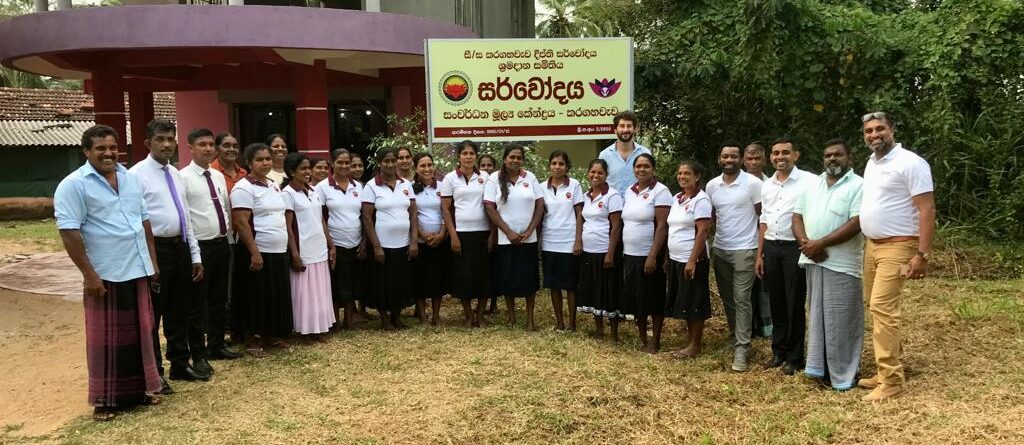
Sarvodaya Development Finance, in Sri Lanka, focused its TA on client protection. The company worked on strengthening policies and procedures around transparency, responsible pricing, and grievance mechanisms, among others. For end clients, this means clearer information and better safeguards; for investors, it signals that the institution is serious about long-term, responsible growth.
What ties these stories together
Across these examples, TA is a series of concrete, time-bound projects designed with the investees themselves. Each assignment responds to a specific gap – in systems, skills or strategy – that stands between a promising business and its next stage of growth.
Together, these projects show how relatively small, well-targeted grants can help companies solve operational challenges, become stronger, safer partners for future public and private investment.