Adesuwa Okunbo Rhodes and Aruwa Capital: making the business case for investing in women

Aruwa Capital Management has been named Gender-Lens Investment Leader of the Year at the BusinessDay BAFI Awards 2026, in recognition of an approach to investment that places gender considerations at the centre of capital allocation. For Adesuwa Okunbo Rhodes, who founded the firm in Lagos in June 2019, the award marks a point in a journey that began long before Aruwa existed, with years of trying to raise a fund in a market that was not yet ready to back her.
Eight years to raise a fund

The numbers she found at the time explained much of her own experience. When Aruwa launched in 2019, fewer than ten female-owned or female-managed funds in the whole of Africa had reached a final close since 2008, and less than 2% of capital was going to female entrepreneurs. “You cannot expect capital to flow to female entrepreneurs if there is an imbalance in who is making the investment decisions,” she says.
She decided to spin out and build her own platform, starting deliberately small. “Setting up Aruwa was my way of saying: let us start smaller with a USD 20 million fund where we can showcase success stories of what happens when women allocate capital.”
Adesuwa’s career began in investment banking and private equity in London, at Lehman Brothers and JP Morgan, followed by TLG Capital, a private equity firm investing across Africa. It was at TLG, she says, that she “really started to see the benefits of investing in the continent.”
In 2014 she moved to Nigeria to help a European fund manager set up its Africa fund. She spent around five years on the road trying to raise USD 100 million, without success. Those years showed her both the gaps in the market and what it meant to raise capital as an African woman. “I also saw what it was like to fundraise as an African woman in what is mostly a white, male-dominated industry,” she says.
Why it matters who allocates the capital
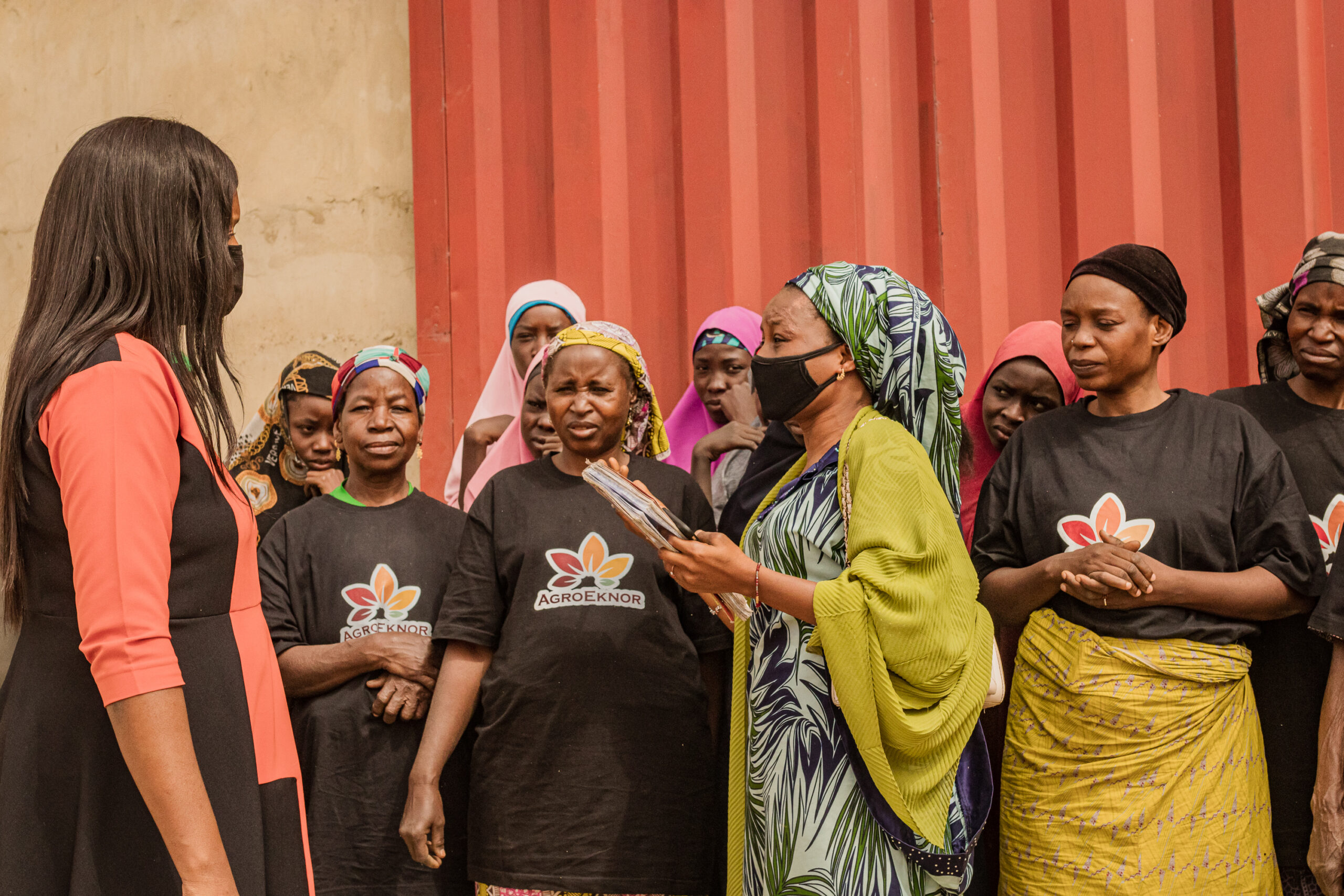
Aruwa is an early-stage growth equity fund investing in small and medium-sized enterprises in Nigeria and Ghana, across healthcare, financial services, climate and clean energy, and essential consumer goods. A gender lens runs through every investment decision.
Adesuwa’s argument is that the effect of having women in charge of capital does not stop at the investment itself. “There is a natural trickle-down effect when women are capital allocators,” she explains. “We see more gender diversity in management, in the workforce, in supply chains and in the customer base.” She points to research showing that women capital allocators are three times more likely to invest in a female CEO and twice as likely to invest in a female founder.
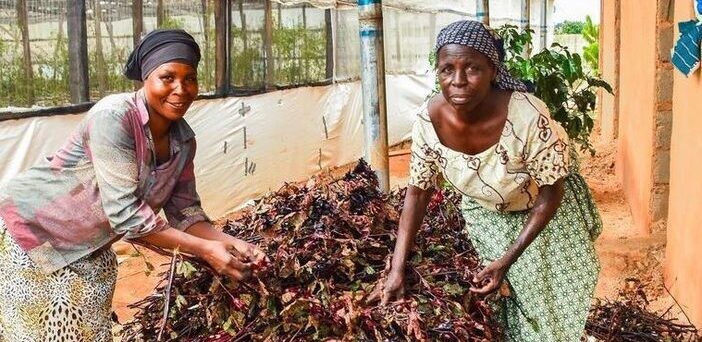
Fund I proved the point. Visa Foundation anchored it with USD 4 million in 2021, after Adesuwa raised local capital during COVID-19 to do her first 4 deals, and Mastercard Foundation Africa Growth Fund and FSD Africa followed. “Once Visa came in, the floodgates opened,” Adesuwa recalls. The fund closed at the end of 2022. At that time she was the only solo female GP in Nigeria to have raised more than USD 10 million for an institutional fund. Fund I portfolio companies grew their revenue by an average of 29 times in local currency, supported more than 200,000 direct and indirect jobs, and 73% of them were founded or led by women.
ElectriFI and Aruwa Capital Fund II
Aruwa Capital Fund II reached its first close of USD 20 million in July 2024 with a target of USD 40 million. In April 2025 ElectriFI, the EU-funded facility managed by EDFI Management Company (EDFI MC), invested USD 6 million in equity through its Nigeria Country Window, as part of a USD 35 million second close that took the fund to 90% of its target. ElectriFI’s commitment supports Fund II’s focus on climate and energy access, with at least 30% of the fund earmarked for clean energy and more than 80% of ElectriFI’s investment directed at Nigeria.
For Adesuwa, the value of the investment went beyond the capital itself. “When we are here on the ground in Lagos and we are able to say that a well-respected DFI like EDFI MC invested in our fund, it gives us a stamp of approval,” she says. “It shows that a DFI has taken us through very rigorous due diligence.”
That signal helped bring in investors who are not allocating much to private equity. After EDFI MC’s investment, a local pension fund and a local insurance company joined the fund. “These are local institutional investors that typically do not allocate much to private equity,” she notes. EDFI MC’s involvement in Aruwa Fund II was catalytic to attract local institutional capital and the fund went on to exceed its original target of USD 40 million having raised USD 60 million to date.”

ElectriFI also provided technical assistance. With grant support from EDFI MC, the ESG consultancy ImpactCrest helped Aruwa build its environmental and social management system and business integrity framework, and the support enabled Aruwa to hire its own Head of ESG. “EDFI MC’s grants and technical assistance support have helped to institutionalise us as a platform as we think about future funds down the line,” Adesuwa says.
“Our investment in Aruwa Capital, through ElectriFI, reflects our conviction that locally led fund managers are best placed to scale the businesses that will define Africa’s next decade,” says Quentin Antoine, Senior Investment Officer at EDFI MC. “As one of the anchor investors in Fund II, EDFI MC has helped mobilise additional capital and deepen impact in clean energy, climate-resilient infrastructure and other key sectors. Aruwa’s gender-lens strategy demonstrates that empowering women across the value chain is a powerful driver of both growth and resilience, and we are proud to support a team delivering this impact consistently.”
Early results from Fund II
As of December 2025, Aruwa’s portfolio companies directly employed 3,634 people. Women hold 44% of those jobs, about 71% of the portfolio is female-led or female-founded, and 70% of employees are under the age of 35.
Jobs
3,634
Women
44%
female-led or female-founded
71%
Changing the narrative
The landscape Adesuwa entered has started to shift. By the end of 2025, Aruwa’s own research counted 39 female-led and female-managed funds in Africa that had reached a final close, compared with fewer than ten when the firm launched. She believes success stories like those of Aruwa Fund I and Aruwa Fund II are part of the reason.
“We are playing our role in advocacy, telling our success stories and being very visible with what we are doing,” she says. “The lived experience I had, where it took me about eight years to raise a fund in Africa, is something I do not want the next woman to go through.”
The BAFI award recognises that work. For ElectriFI, it is also a reminder of why backing locally led fund managers matters: capital placed with the right team reaches companies, and people, that larger investors often do not.