

Driving Alignment: Partnering for Europe’s Global Competitiveness

by Rodrigo Madrazo, CEO of EDFI Management Company
Sitting among my colleagues during Panel 2 at our Corporate Day event, I found myself alternating between agreement and concern, approval and challenge. The panel’s theme, strengthening partnerships for global competitiveness and sustainable development, could easily become just another conference slogan, yet on this occasion, the conversation managed to dig beneath abstractions and into the real tensions standing between Europe’s ambitions and actionable results.
Intro to the panel session 2
- Felix Fernandez-Shaw, Director for Latin America, the Caribbean and relations with all Overseas Countries and Territories – European Commission DG INTPA
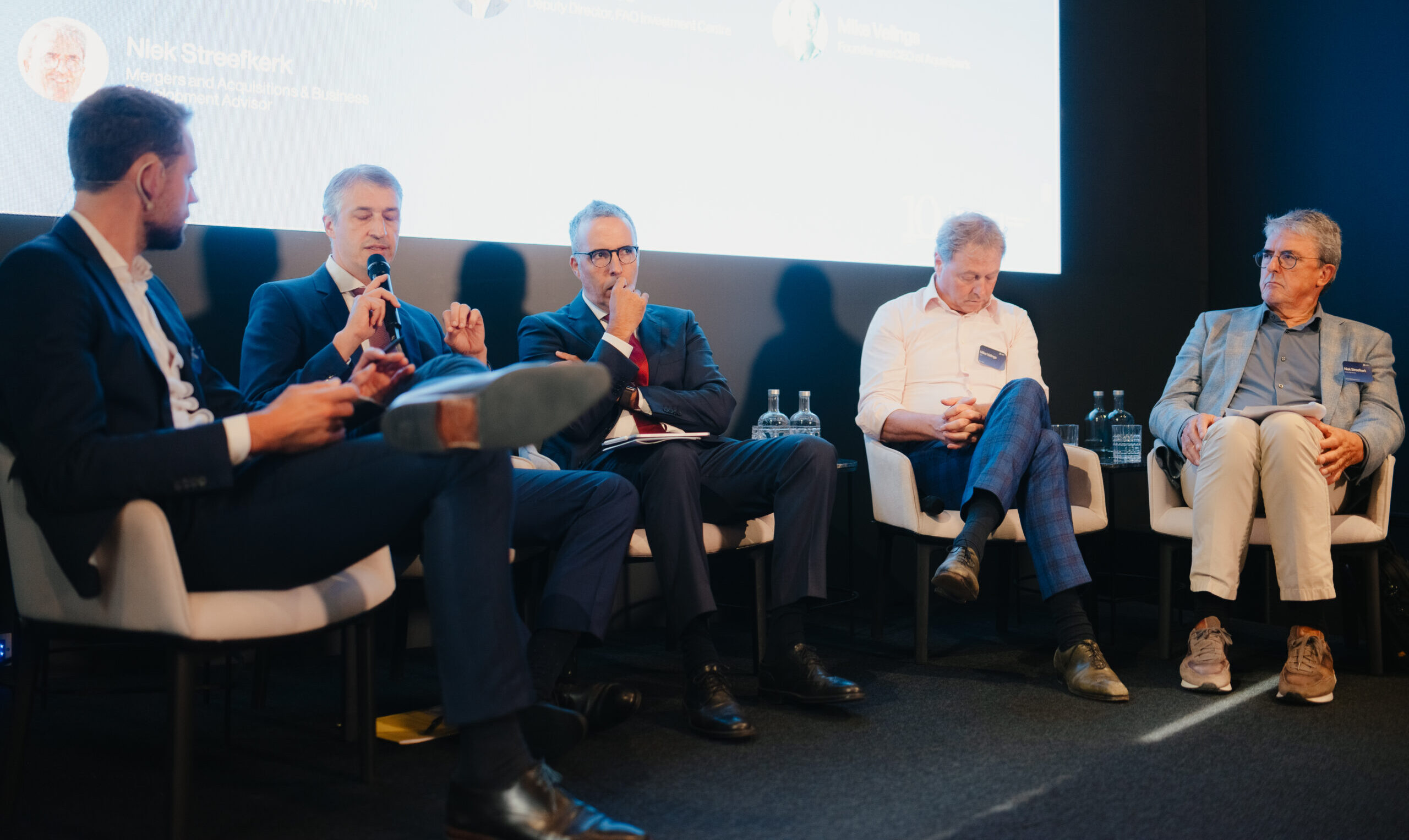
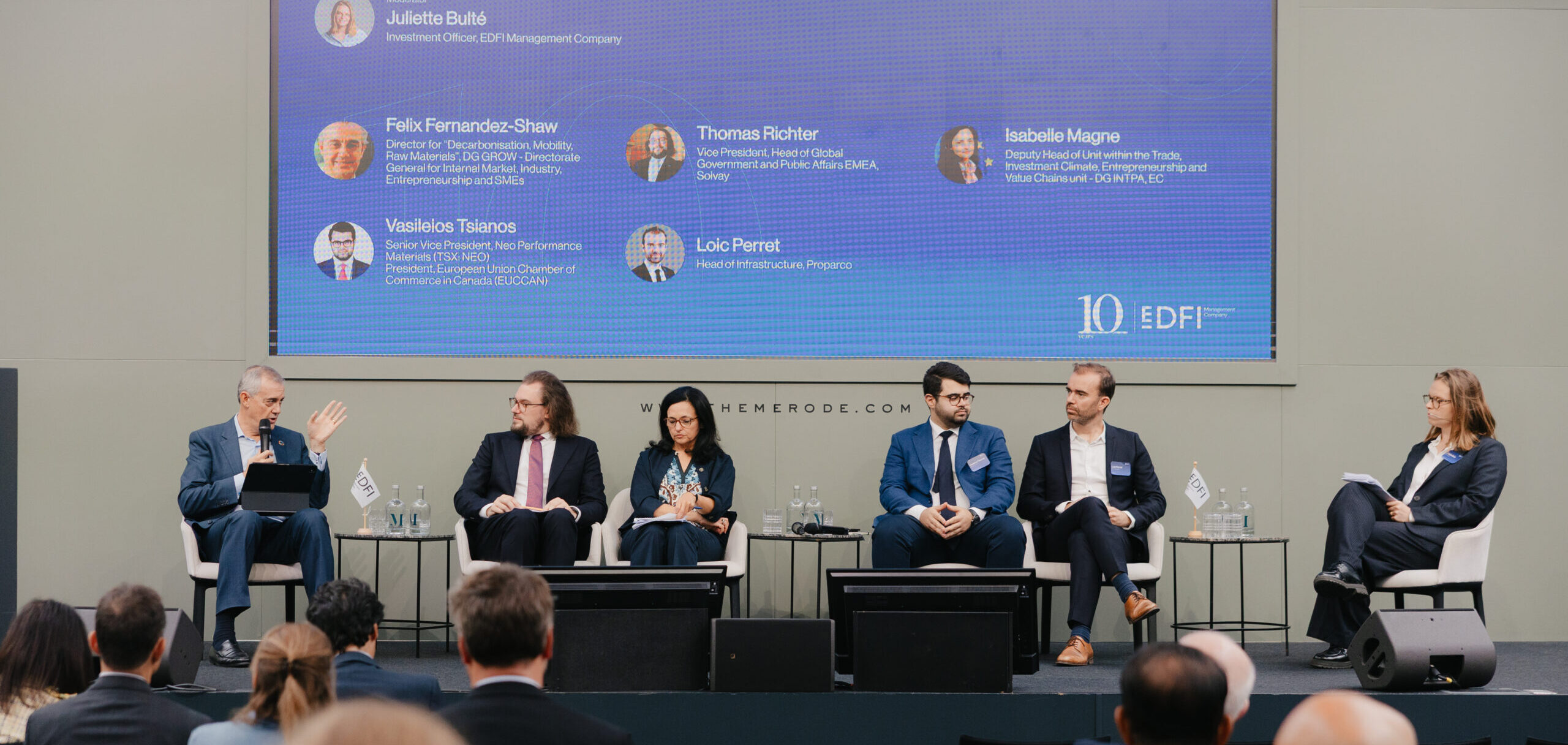
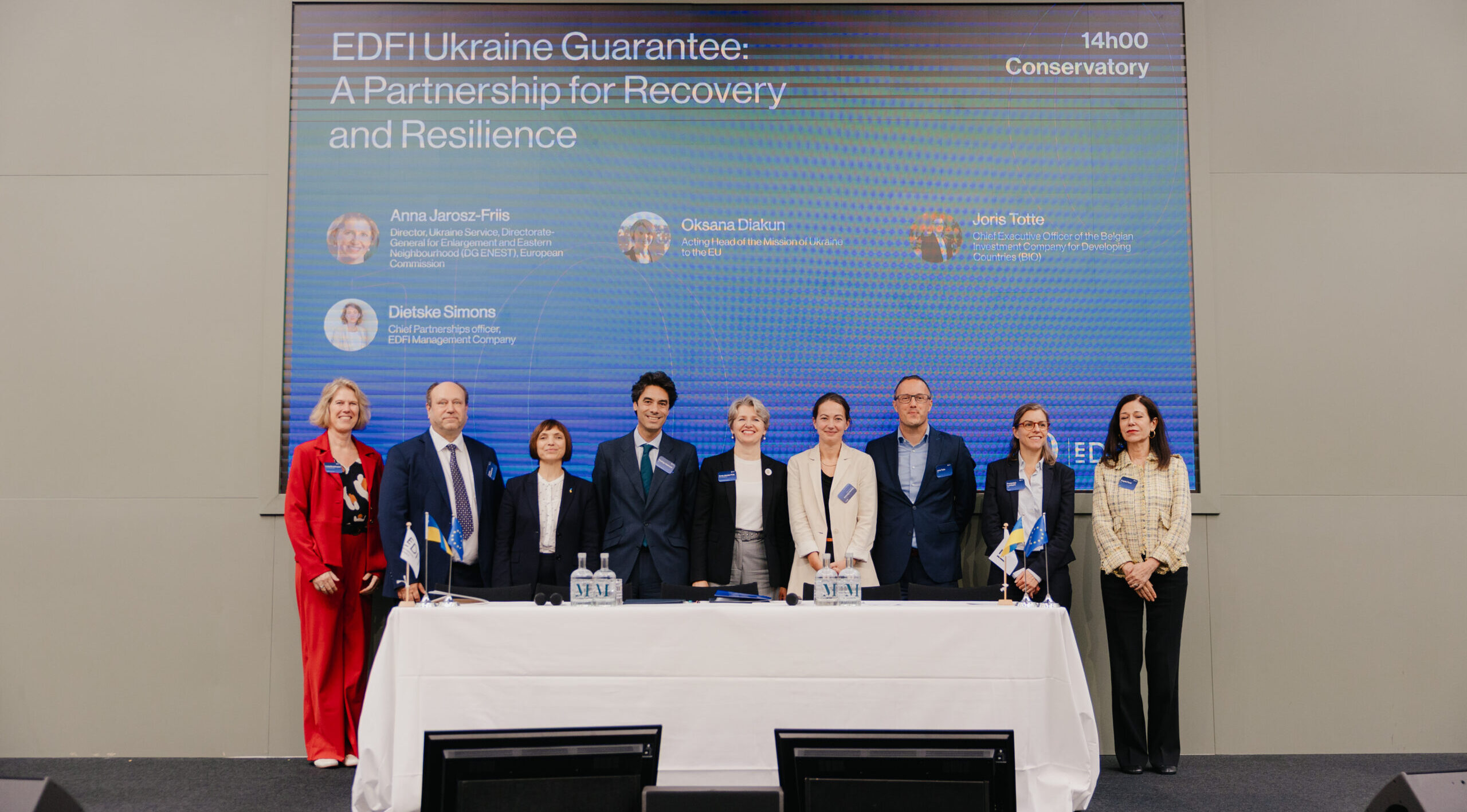
Panel discussion 2 – Strengthening Partnerships for Global Competitiveness and Sustainable Development
- Yvonne Bakkum, Chair of the Supervisory Board – Incofin
- Michael Jongeneel, CEO – FMO
- Jean Van Wetter, CEO – Enabel
- Ingrid Hoven, Managing Director – Deutsche Gesellschaft für Internationale Zusammenarbeit (GIZ) GmbH
- Pablo De Ramon Laca, Chairman and CEO – Cesce
- Moderator – Antoine Quero, Financial advisor – European Fund for Sustainable Development Plus (EFSD+), DG INTPA – European Commission
What struck me immediately is the appetite in the room for doing things differently. Jean Van Wetter’s case – European agencies arriving with training programmes, or investment alone in Namibia – points toward the risk of fragmented effort. The Namibian president’s demand is clear: bring the private sector, bring governance reform, bring everything together. I found myself nodding at the distinction. If we fixate on the ‘bus’, or any isolated intervention, we neglect the whole ecosystem that should support it. Felix Fernandez-Shaw used the analogy: we want the entrecote, and too often get handed the cow with little guidance on how to process it – real expertise wasted by lack of coordination.
Pablo De Ramon Laca was candid about Europe’s agility problem. He described how competitors can deploy factories and investments in weeks, while Europeans search for alignment and navigate endless layers of regulation. In the audience, I pondered what he said: do we truly know our sectoral strengths? Have we decided where to lead, and are we ready to move at the pace the world demands? It’s not just about the technology or the capital; it is whether we, as institutions, can shed procedural inertia and act in concert.
As Ingrid Hoven observed, Europe’s reputation rests on trust and cooperation. But the demand, doing more with less, sets a new bar for performance. It’s easy to celebrate our values, far harder to translate them into integrated vehicles and platforms that reach scale, in the geographies and sectors that need them. I found her optimism grounded by a sober view of our limitations; it echoes a conviction I hold closely: challenge is not the enemy, complacency is.
Michael Jongeneel brought the conversation into sharp focus with his insistence on the indispensability of long-term partnerships and orchestrated action. His questions cut through abstract aspirations to the operational heart of the matter. Can Europe’s DFIs finally move beyond fragmented approaches to standardize, pool resources, and craft operational pathways that not only endure but scale to meet the sector’s ambitions? His candour left little room for complacency. He didn’t merely signal challenges but underscored an urgent need for top-down alignment paired with flexible, bottom-up cooperation, an orchestration that is easier said than done, yet fundamental if we are to transform intent into impactful reality.
Yvonne Bakkum was right to call for clarity in roles and true co-design of solutions. The lesson here is unmistakable: impact is not achieved by multiplying funding alone, but by harmonizing efforts and enabling the private sector to do what it does best. Our diversity can be a strength, yet only if we find a method for making it coherent.
These comments sharpened my own questions – how do we go further? Are we positioned to confront the competitive realities posed by the US and China, or are we still prioritizing familiar processes over results? Are we willing to package interventions, set clear priorities, and standardize across our institutions, even if that means difficult changes to how we have always worked?
I hope that the panel challenged each of us to move past rhetoric and toward engineering genuine partnerships. Europe’s legacy is trust, but tomorrow’s credibility depends on our ability to adapt, align, and act with urgency.
We should challenge every assumption and relentlessly pursue mechanisms that convert ambition into outcomes on the ground. The future will reward those who design methods – practical, repeatable, scalable – that harness both our diversity and our shared purpose. If we get that right, this generation of European development finance will remain relevant. If not, we will have squandered an advantage that is ours to lose.